.avif)
Automotive Accident Reconstruction & Forensic Analysis
Driver Perception-Reaction Time, Visual Conspicuity and Nighttime Illumination, Hazard Detection, Expectancy Violations, and Human Factors Safety Analysis
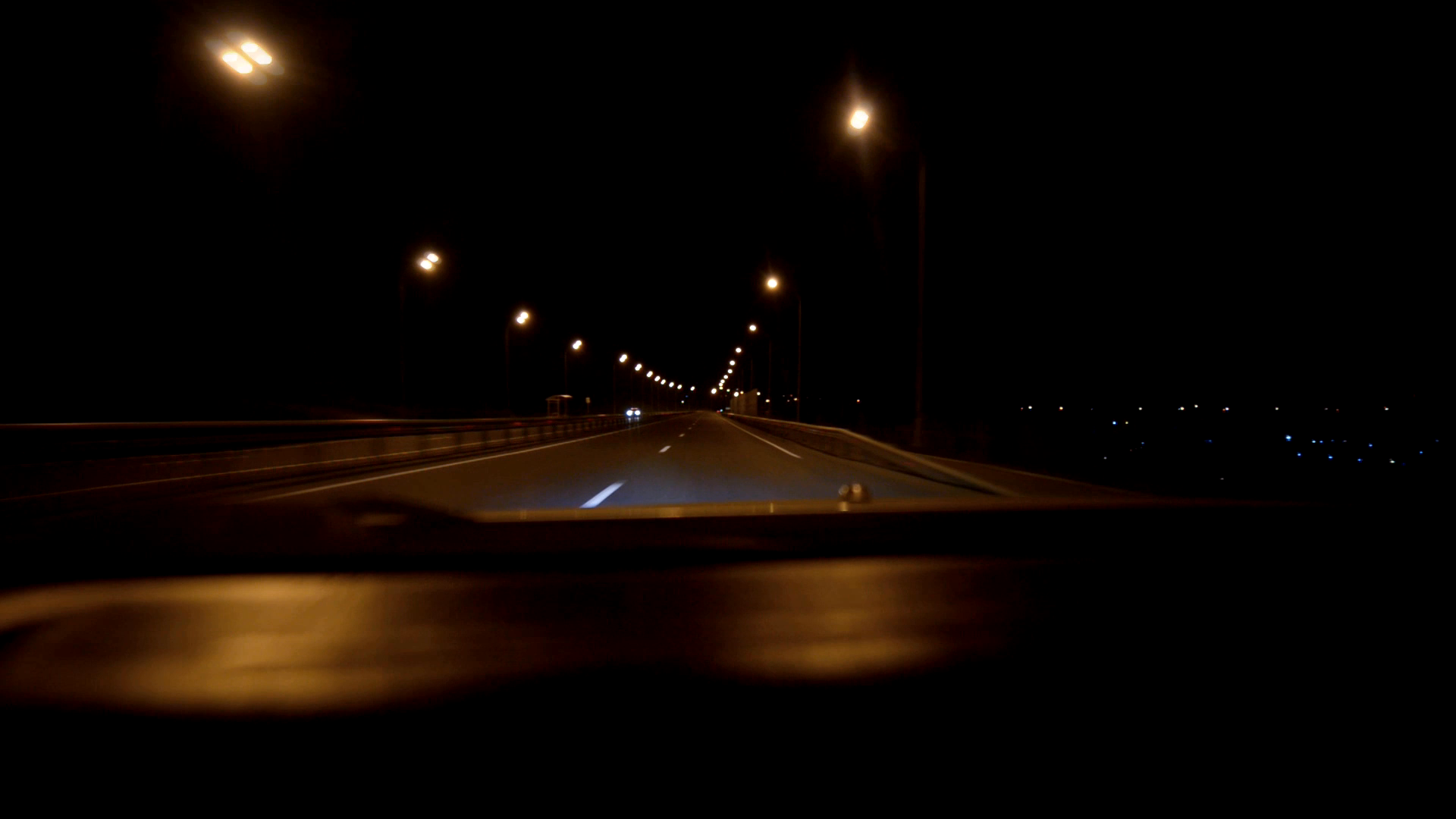
Human factors engineering provides a scientific framework for understanding how drivers interact with roadway environments, integrating principles from perceptual psychology, cognitive science, and transportation safety. Foundational work by Olsen emphasized that safe driving is constrained by the limits of human perception and decision-making, while later syntheses by Shinar and Castro demonstrated that roadway safety outcomes are best understood as the product of interactions between human capabilities and environmental demands. Across this body of research, three interrelated constructs emerge as central to forensic and safety analysis: conspicuity, perception–reaction time, and the broader evaluation of safety within complex driving systems.
Conspicuity
Conspicuity refers to the degree to which an object or hazard attracts attention within a driver’s visual field. As defined in the human factors literature by Noy and Karwowski, conspicuity is not synonymous with mere visibility; an object may be physically detectable yet fail to draw cognitive attention. This distinction has been extensively examined in studies by Tyrrell and Owens, whose work on nighttime driving demonstrated that drivers frequently look toward objects without consciously perceiving them, particularly under low illumination conditions.
The theoretical basis for conspicuity can be traced to Gibson’s ecological approach to perception, which posits that visual perception is shaped by the interaction between the observer and environmental affordances. Building on this perspective, Edgar and Edgar showed that attention is selectively allocated based on task demands and expectations, meaning that objects inconsistent with a driver’s anticipatory model may be overlooked even when clearly present. Empirical findings summarized by Shinar further indicate that conspicuity is influenced by contrast, motion, luminance, and contextual relevance, all of which determine whether a stimulus captures attention in time to support an appropriate response.
These principles have direct implications for roadway safety. Research involving pedestrian detection and vehicle visibility consistently demonstrates that low-conspicuity hazards significantly increase detection time and crash risk. Owens and Sivak, analyzing crash data and experimental findings, highlighted that nighttime conditions exacerbate this problem by reducing both visual acuity and attentional sensitivity. Consequently, conspicuity is not a static property of an object but a dynamic interaction between stimulus characteristics and human perceptual processes.
Perception–Reaction Time
Perception–reaction time represents the temporal interval between the availability of a stimulus and the initiation of a driver’s response. Classical formulations, as discussed by Olson and Sivak, conceptualize this process as a sequence involving detection, recognition, decision, and motor execution. However, subsequent analyses by Green and by Francis, Tyrrell, and Owens demonstrate that this sequence is highly variable and context-dependent, challenging the application of fixed or simplified reaction time values in safety analysis.
Green’s methodological work underscored that perception–reaction time is not a single constant but a distribution influenced by expectancy, stimulus complexity, and environmental conditions. Francis, Tyrrell, and Owens extended this argument in a forensic context, emphasizing that misapplication of perception–reaction time can lead to erroneous conclusions when analysts fail to account for whether a hazard was actually conspicuous or anticipated. Their historical review shows that longer response times are not anomalies but predictable outcomes when drivers encounter unexpected or ambiguous stimuli.
Additional research synthesized by Shinar and supported by experimental and simulation studies demonstrates that reaction times increase under conditions of high cognitive workload, reduced visibility, and divided attention. Muttart and colleagues further showed that drivers respond more slowly to stopped or slow-moving lead vehicles when those vehicles violate expectations, reinforcing the role of anticipation in shaping response behavior. These findings collectively establish that perception–reaction time must be evaluated within the full context of the driving task rather than treated as an isolated parameter.
Safety Analysis
Safety analysis in roadway environments requires the integration of conspicuity and perception–reaction time within a systems-level framework. Human factors researchers such as Olsen and later Noy and Karwowski have emphasized that crashes rarely result from a single failure; instead, they emerge from the interaction between human limitations and environmental demands. This perspective is reinforced by Castro’s work on visual and cognitive performance, which demonstrates that driver behavior is constrained by processing capacity, attentional resources, and perceptual thresholds.
Within this framework, environmental conditions play a critical role. Lighting, weather, roadway geometry, and traffic complexity all influence both the detectability of hazards and the time available for response. Owens’ research on twilight and nighttime vision illustrates that drivers often overestimate their visual capabilities, leading to situations in which hazards are technically visible but not effectively processed. Similarly, Schieber’s work on aging and vision highlights that physiological factors such as reduced contrast sensitivity and slower processing speeds can further degrade performance, particularly in demanding environments.
Modern safety analysis also recognizes the importance of expectancy and situational awareness. When roadway conditions align with driver expectations, responses tend to be faster and more reliable. Conversely, unexpected events disrupt cognitive processing, increasing both reaction time and error likelihood. This principle is central to the findings of Muttart and others, who demonstrated that deviations from expected traffic patterns significantly impair driver response.
In forensic applications, these insights necessitate a careful and scientifically grounded approach. Simplistic assumptions about driver performance, including fixed reaction times or perfect perception, are inconsistent with the empirical literature. Instead, accurate analysis requires consideration of when and how a hazard became perceptible, whether it was sufficiently conspicuous to attract attention, and how contextual factors influenced the driver’s ability to respond. As emphasized by Francis, Tyrrell, and Owens, failure to incorporate these variables can lead to substantial errors in interpretation.
Works Cited
Edgar, G., & Edgar, H. (Year). Visual perception and attention: Errors and accidents. In An Introduction to Applied Cognitive Psychology. Taylor & Francis.
Francis, E. L., Tyrrell, R. A., & Owens, D. A. (2020). Perception–response time and its misapplication: An historical and forensic perspective. Theoretical Issues in Ergonomics Science.
Gibson, J. J. (1979). The ecological approach to visual perception. Houghton Mifflin.
Muttart, J., Kuzel, M., & Dinakar, S. (2021). Factors that influence drivers’ responses to slower-moving or stopped lead vehicles. SAE International Journal.
Olsen, R. A. (1981). Human factors engineering and psychology in highway safety. In Transportation and Behavior. Springer.
Schiff, W., & Arnone, W. (2018). Perceiving and driving: Where parallel roads meet. Taylor & Francis.
Testaferrata de Noto, A. (2020). Driver perception-reaction times in level 3 automated vehicles. University of Malta.
Tyrrell, R. A., & Owens, D. A. (1998). Human factors in nighttime driving. Journal of Safety Research.
Green, M. (2000). “How long does it take to stop?” Methodological analysis of driver perception-brake times. Transportation Human Factors.
Olson, P. L., & Sivak, M. (1986). Perception-response time to unexpected roadway hazards. Human Factors.
Our expertise in Automotive
Biomechanical Analysis
Bridging the gap between physical mechanics and human physiology.
Human Factors Engineering Analysis
We examine how people perceive, decide, and act in critical moments
Accident Reconstruction
Decoding physical evidence through physics, kinematics, and vehicle dynamics.
Expert Witness Testimony
We present findings with clarity and authority before Judge and jury
Related case studies
The Variable Metric of Perception Reaction Time: Why Experts Disagree
Driver Behavior & Collision Reconstruction: Perception-Reaction Time (PRT) Variability, Unexpected Hazard Detection, Cognitive Workload, and Expectancy Violations

Delta-V and Injury Biomechanics in Motor Vehicle Collisions: A Scientific Framework for Interpreting Crash Severity
Injury Biomechanics & Collision Reconstruction: Delta-V Analysis, Low-Speed Impact Severity, Occupant Kinematics, and Causation Assessment